
This page covers the brain basics you meet in Mind Toolbox articles, in plain words.
This page is for general understanding. It does not replace advice from a health professional.
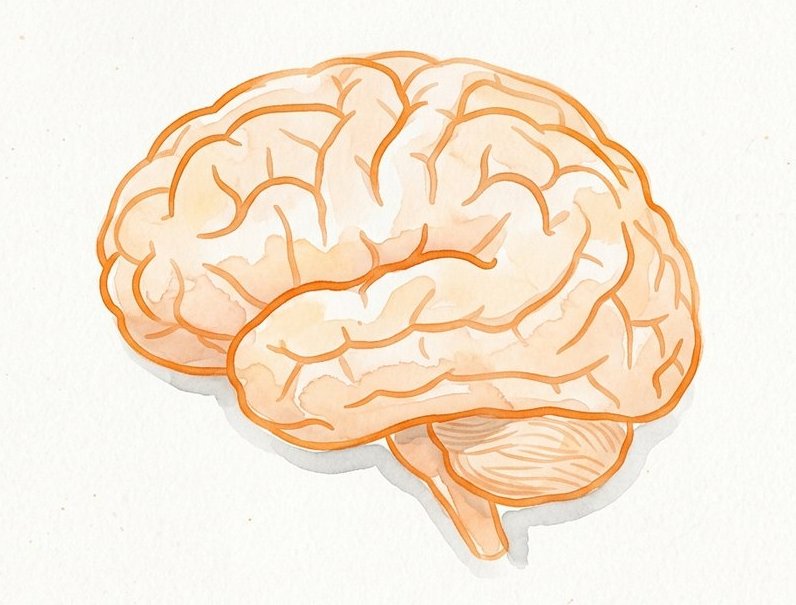
Amygdala
The amygdala is a small, almond-shaped cluster of cells deep in your brain. You have one on each side. It plays a key role in detecting potential threats and triggering your stress response, often before you consciously process them.
A busy amygdala is not a faulty one. It is doing its protective job, sometimes too eagerly. It also helps attach emotion to your memories, which is why a smell or a sound can bring a feeling back.
Prefrontal cortex
The prefrontal cortex is the part of your brain behind your forehead. It helps you plan, make decisions, and judge whether a threat is real. It can also help calm strong emotional reactions.
It works more slowly than the amygdala. When you feel tired or stressed, its influence can weaken. That is why clear thinking is harder when you are anxious.
Cortisol
Cortisol is a stress hormone. Your adrenal glands, two small glands above your kidneys, release it. It helps your body find energy and stay alert when you need to act.
Your cortisol level also follows a daily rhythm. It is usually highest in the morning and lowest at night. Short bursts of cortisol are helpful. However, when stress persists for weeks, elevated cortisol levels can disrupt your sleep and mood.
Fight-or-flight response
The fight-or-flight response is your body’s automatic reaction to danger. Your heart beats faster, your breathing speeds up, and your muscles tense, ready to act. Some people also freeze.
The response runs in seconds and requires no decision on your part. It helps in real danger. In everyday life, the same response can be triggered by a meeting, a deadline, or a worrying thought.
Vagus nerve
The vagus nerve is a long nerve that runs from your brain to your heart, lungs, and gut. It is a main part of your parasympathetic nervous system that helps your body slow down after stress.
When you exhale, your heart rate naturally slows down, guided by the vagus nerve. Researchers measure this effect through heart rate variability (HRV), which tracks the small timing changes between heartbeats.
More about brain basics and anxiety
To see how these terms show up in daily life, start here.
Hidden Anxiety: 12 Subtle Signs You Might Be Ignoring