
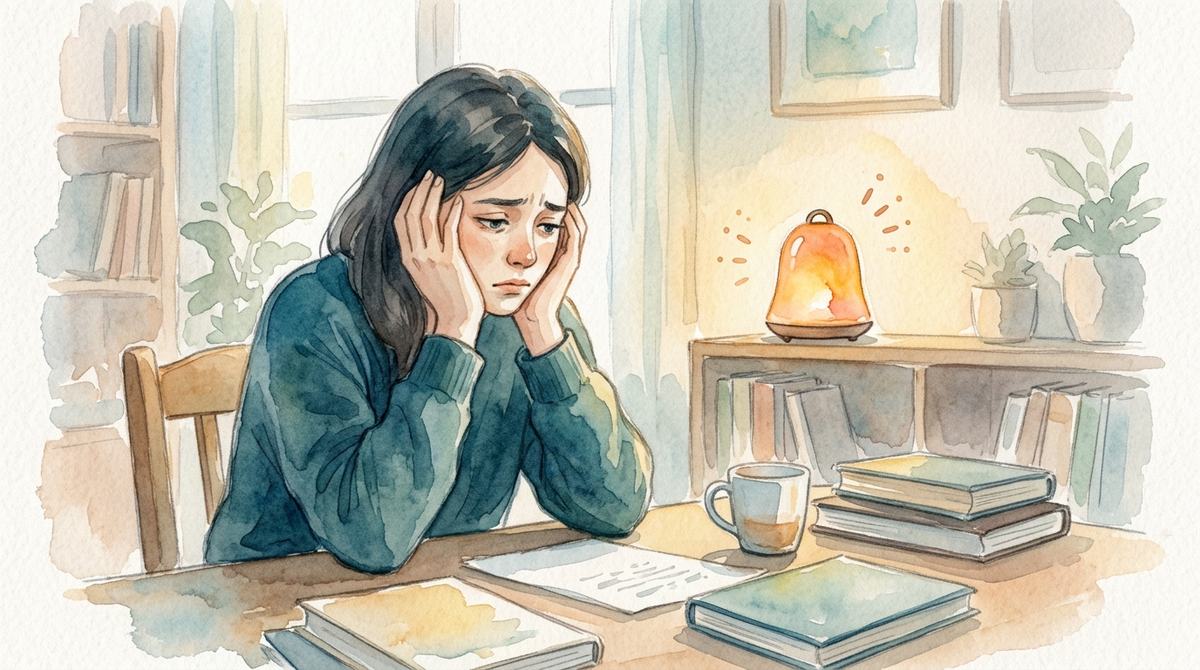
You are sitting at your desk when your boss calls. “Can you come to my office?” That is all they say. Your heart jumps, your stomach tightens, and your mind races through every way it could go wrong. This article explains why and how nervous system regulation can help.
Your boss may only want to talk about next week’s schedule. Yet your body reacts as if you are in danger.
If this feels familiar, your brain is not broken. It is doing its job too well. The good news is that you can train it to settle, and you can start today.
Signs your alarm may be sounding too often
Anxiety does not always look like panic. You may recognise some of these:
- You replay a conversation for hours after it ends.
- You wake at 3 am with your mind already running.
- Your jaw, shoulders or stomach feel tight for no clear reason.
- A short message from your boss spoils your whole afternoon.
- You avoid things, or say yes to everything, to dodge a bad feeling.
If you nodded at two or three, your alarm may be working overtime. Later articles in this series look at anxiety at night, overthinking, panic attacks, and anxiety in the body.
What is happening in your brain when you are anxious
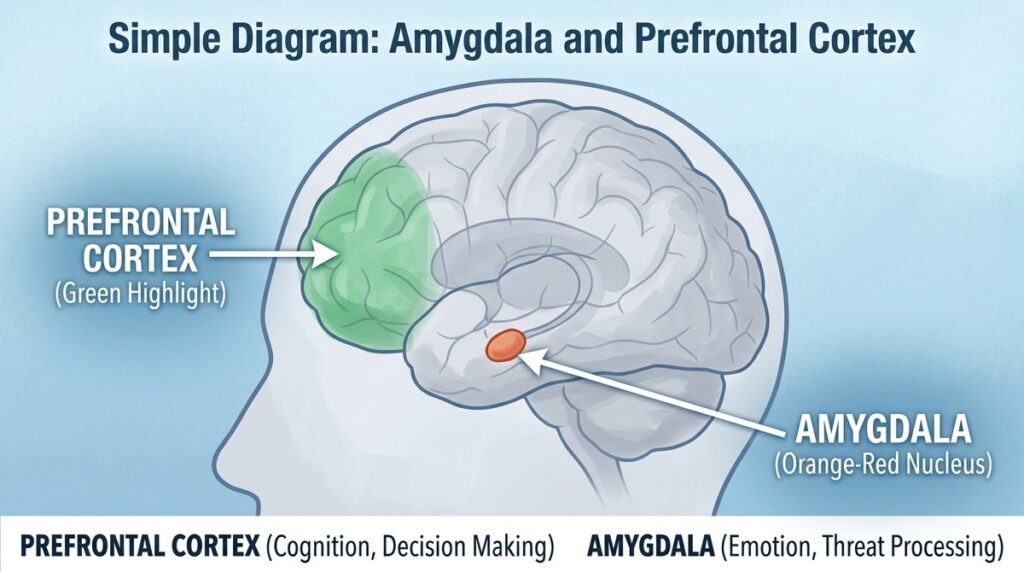
Two brain areas do most of the work here.
- The amygdala is a small, almond-shaped cluster deep in your brain. It scans for potential threats and can trigger your stress response in a fraction of a second, before you have time to think.
- The prefrontal cortex sits behind your forehead. It helps you plan, weigh things up, and judge whether a threat is real.
When the amygdala raises the alarm, your body releases stress hormones such as adrenaline and cortisol. Your heart speeds up, your breathing is shallow, and your muscles tense. This is the fight-or-flight response. The Mental Health Foundation of New Zealand describes it as a survival response that prepares your body to fight, run away, or freeze. It helps when a car swerves towards you.
The trouble starts when the same alarm sounds for a phone call, a meeting, or a quiet house at night. Your prefrontal cortex can calm the alarm, but it works more slowly. When you feel tired, stressed, or anxious for weeks, it often shows up later.
Why “just calm down” does not work
You know you are safe, and you still feel afraid. That is not a failure of willpower.
Telling yourself to calm down uses the slower, thinking part of your brain. The alarm runs on the faster, body-based part. This is why reassurance from a friend often helps for a minute and then fades.
Your brain also learns through repetition. An alarm that sounds often can get quicker to fire. The same learning works in the other direction: with practice, your brain can build new, calmer responses.
What nervous system regulation means
Nervous system regulation is the skill of helping your body return to calm after the alarm sounds. It does not mean you never feel anxious. It means the alarm rises, peaks, and settles faster.
You do not build this skill by thinking harder. You build it by giving your body small, repeated signals that it is safe.
Why you may not notice your own anxiety
When a busy alarm runs every day, it starts to feel normal. You tell yourself that everyone feels this tense. You keep working, caring for others, and getting things done, so nobody sees the effort.
Capable people often cope by doing more. That keeps the alarm busy and leaves little time to notice it.
Living on high alert for months can also wear you down. Constant stress is one route to burnout, where you feel exhausted, flat, and unable to keep going. If that sounds familiar, read Job Burnout: Regain Balance in Your Life.
Nervous system regulation starts with noticing. A tight jaw, shallow breathing, or a racing thought is your alarm talking. When you notice it, your prefrontal cortex gets a chance to step in.
A nervous system regulation exercise: the long out-breath

Slow breathing is one of the simplest ways to help your body settle. The exercise below takes about two minutes. Try it when you feel calm first, so it feels familiar when you need it.
- Sit or stand and let your shoulders drop.
- Breathe in through your nose for a count of four.
- Breathe out slowly through your mouth for a count of six, as if you were fogging a window.
- Repeat for ten breaths.
Why slow breathing helps
Your autonomic nervous system has two main branches. The sympathetic branch works like an accelerator. It speeds you up. The parasympathetic branch works like a brake. It slows you down.
Both branches work all the time, and your breathing shifts the balance a little. When you breathe in, the calming brake from your vagus nerve eases, and your heart rate rises. When you breathe out, the brake returns and your heart rate falls.
A review of 223 studies found that slow breathing strengthens this calming brake. Research has not yet shown that breathing out for longer works better than inhaling and exhaling for equal duration.
Choose the rhythm that feels comfortable. Think of it as a gentle nudge towards calm, not an off switch.
Your alarm may not switch off completely. That is fine. With each breath, you tell your body it can slow down. The more you practise, the easier that message becomes.
Practise once a day for a week. Then use it when the alarm starts, not after it peaks.
Everyday habits that support your nervous system
Small habits support nervous system regulation by giving your alarm less to react to. None of them replace therapy, but they help.
- Sleep. A tired brain tends to react more strongly to stress. Regular sleep and wake times make a difference.
- Movement. A ten-minute walk can ease muscle tension and give your mind a break.
- Caffeine. Strong coffee can mimic anxiety, with a racing heart and jitters. Notice how much you drink on stressful days.
- Pauses. Take one minute between tasks to breathe out slowly. Your body treats it as a small reset.
When to seek professional help
This article explains how anxiety works. It does not replace support from a health professional. Consider reaching out if:
- The alarm sounds most days for several weeks
- Anxiety disrupts your sleep, work or relationships
- You avoid places or people to stay away from the feeling
- You have panic attacks, or you fear the next one
Your GP is a good first step. A therapist who works with the brain and body can also teach you nervous system regulation and help you retrain the alarm response.
If you ever have thoughts of harming yourself, you do not need to wait. In New Zealand, call or text 1737 any time, day or night, to talk with a trained counsellor. In an emergency, call 111.
What to read next
Anxiety does not always look like panic. Sometimes it looks like a busy, capable person who never switches off. Read Hidden Anxiety: 12 Subtle Signs You Might Be Ignoring to see if that sounds like you.
An anxious alarm can also quieten how you see yourself. If you often feel “not good enough”, this article on self-worth shows how the two connect.
If you want support retraining your alarm response, I work with clients online and in person. You can read about anxiety therapy at Mind Toolbox and book a free discovery call.